

Alternatively, in a similar manner to fintamin's method, you could attach a target for the in-game tracked camera to your train using a basic object attach script and use that
All Comments
17321 to 17340 of 19724Filter comments
For offride tracking shots you can create a copy of the coaster and lower it underground a certain distance, and then use JetPulse's Custom Tracked Target Camera and set its vertical offset the same as the lowered distance. As the two coasters run simultaneously and identical routes, it looks like the camera is following the custom train.

For Lagoon's Wooden Coaster it gets a check by the park carpenters everyday, followed by the mechanic crew both walk the entire track checking everything out. Lagoon is very through in its safety checks.
I mean the off ride shots would be difficult to do.
That is why I am wondering
Just record the video using in game trains, then make off ride using tcm trains.
Hello -
I'd like to use TCM's LSM trains for my latest project but I feel like it would be difficult to make a video without being able to get the standard ride view options. Is there a way to do this?
Thanks,
-LC
To my knowledge (not a definite source, but I am an engineering consultant in a related field):
There's a difference between the daily checks that parks perform and the less frequent (annual or less) checks. I think Norwegian Coasterfan is getting at that point. To my knowledge, the primary focus of the daily check is to make sure the nails that hold the rail to the wood have not lifted and pound in any that have. I'm sure they keep a look out of other things as well, but I think that is the primary purpose as the rail receives the most abuse and lifted nails can do a lot of damage to the train and riders if left unchecked. It doesn't include inspection of the entire support structure like an annual maintenance check would.
intim305 posted on March 3rd, 2018
I know in some places they will put a little line of paint over the connection so that they can easily tell if it has moved if the seal in the paint is broken in any way. I'm not sure this is done on all wooden coasters but I've definitely seen it in a few places.
To my knowledge, the paint isn't so much to check for bolt slippage but to check for bold pre-tension. The amount of tensile force in a bolt is specified in a design to make the stresses in the joint behave properly. A common way to ensure enough pre-load is on the bold is to finger tighten the bolt, paint or scratch a line across the bolt and nut, and then turn the nut a particular amount of turns based on the necessary pre-load and the bolt geometry. It can be a cheaper alternative than giving every worker a sensitive torque wrench that they accidentally break and have to replace every month...
iSatnav posted on March 4th, 2018
Wooden coasters generally use massive nails I believe, and the sheer number of them is probably partially for redundacy, so one broken one won't make a huge difference. This, presumably, allows for checks to be slightly less thorough, only looking for major issues.
Generally, structural redundancy isn't for something like this. Structures are designed to withstand a particular load (the design load). This load is statistically calculated and then a safety factor is applied to help account for "unknowns" such as property variation or reasonably unforeseeable loads. This is really where structural redundancy lies. Structures are not then designed with additional redundancy such that part of the structure may fail and still bear the design loads. Generally you just barely handle design loads and that's it. If part of the structure fails and design loads can't be handled, that's a serious problem.
^ Yep. White Cyclone closed in January (I think?) to undergo the I-box treatment
Last October

My gosh, when did this get announced?


Testing around with ENV settings again, trying to find a balance between too dark and too light
In this video you can see that Efteling check and tighten every single screw on Joris en de Draak once a year. I assume all parks do the same...
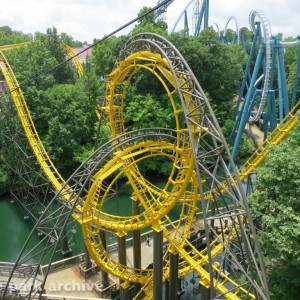
^ exactly what I was going for :D
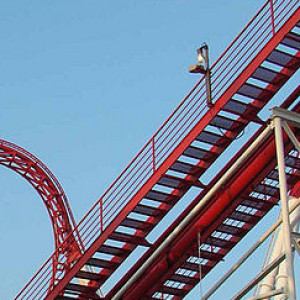
I see, I figured redundancy was a key component in reducing the amount of required maintenance.
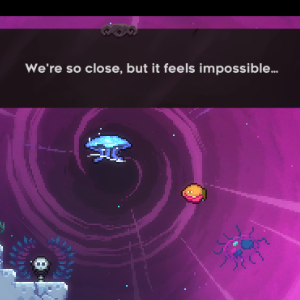
Like a mash-up of Goudurix, Drachen Fire, and RMC elements.

^ Pretty nice layout, it reminded me of a redone Drachen Fire in a lot of ways.
^looking good but maybe a bit slow towards the end.
Here's a video of my current project, a Vekoma MK1101 coaster. I'm thinking of adding a Steam punk-esque theme to it
^that's looking very nice already!
Today I came across a new bug when I tried to import a coaster made with FVD. Basically the script crashed while parcing abbreviated numbers (3ds Max turned 0.000001 into 1e-06 and the unit conversion function didn't like this). I fixed the problem by letting the script set the system units to meters during the import process. This eliminates the need to convert the coordinates to system units and thus abbreviated numbers aren't a problem anymore. As a byproduct this also eliminates the need for 2 seperate files for dots or comma's as decimal seperators.
In short: There's now one script that should work for everyone and hopefully all the bugs have been solved :P. Go get it in the first post.

^ I got your back! To insert an image, copy or remember this code:

Be sure to get the image URL (right-click on the picture, copy Image URL) and not the URL of the web page.

Hello NLC! A couple years ago I was occasionally active on NLE as Screamingchicken77, and I thought it was about time that I start an account here just so I can keep up on what's going on in the Nolimits universe. This is Madman, an inverted coaster by myself.

(Thanks King!)
17321 to 17340 of 19724